Coding and Robotics in Foundation Phase
Wishlist Share

About Course

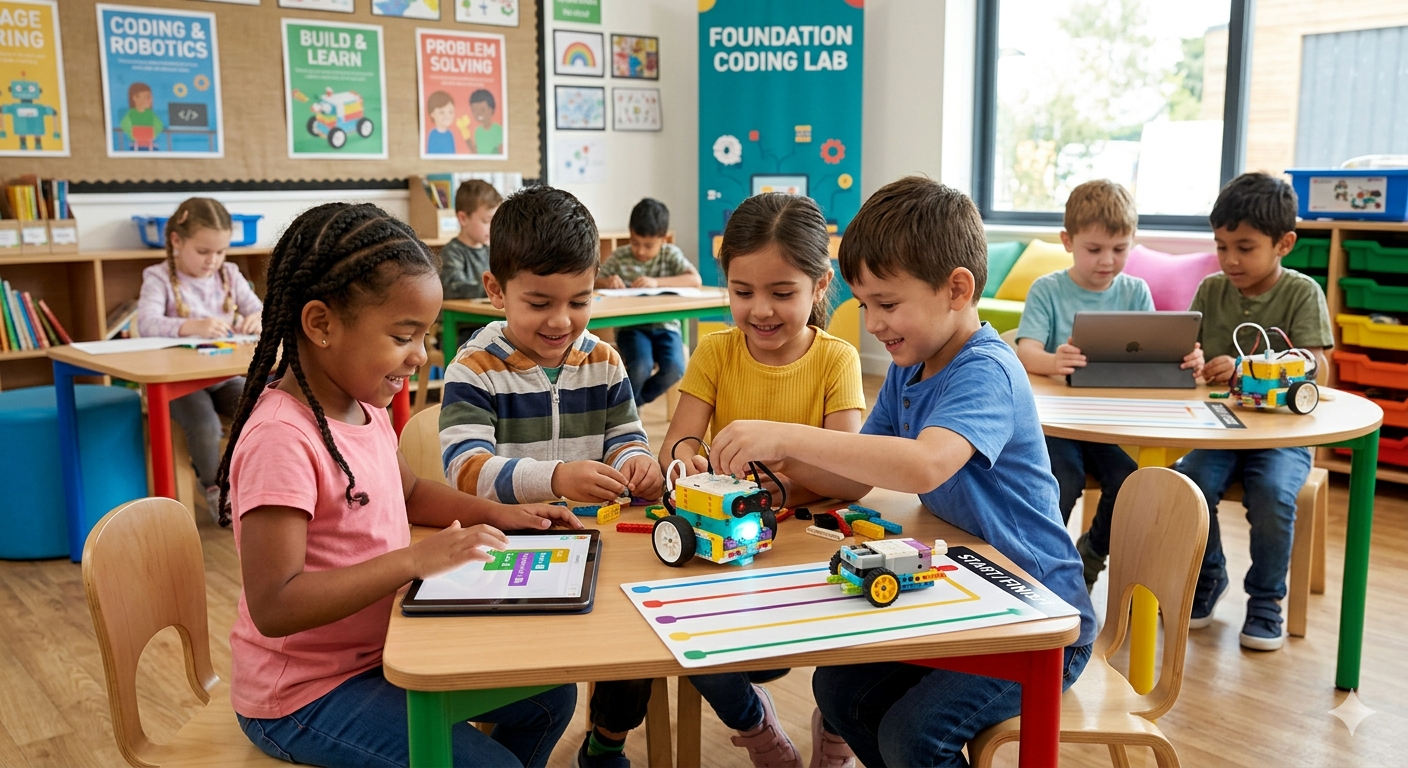
Welcome to Coding and Robotics in Foundation Phase, a comprehensive course designed to equip Foundation Phase teachers, student teachers, homeschool educators, and education professionals with the knowledge, skills, and confidence to teach Coding and Robotics effectively in Grades R–3.

This course introduces the fundamental concepts of coding, robotics, computational thinking, and digital literacy through practical, engaging, and age-appropriate learning experiences. You will discover how young learners can develop logical thinking, creativity, collaboration, communication, and problem-solving skills using both unplugged (screen-free) and technology-based activities.

Throughout the course, you will explore key topics including computational thinking, algorithms, sequencing, pattern recognition, abstraction, decomposition, robotics, digital citizenship, and classroom assessment. You will also learn how to plan engaging lessons, integrate Coding and Robotics across the curriculum, and create a positive STEM learning environment that encourages curiosity and innovation.

Designed with the South African Foundation Phase curriculum in mind, this course provides practical strategies, classroom activities, downloadable resources, and assessment ideas that you can immediately apply in your teaching. Whether you are new to Coding and Robotics or looking to strengthen your classroom practice, this course offers step-by-step guidance to help you teach with confidence.

What You Will Learn

  • Understand the foundations of Coding and Robotics in the Foundation Phase.
  • Develop computational thinking skills through fun, learner-centred activities.
  • Teach algorithms, sequencing, pattern recognition, decomposition, and abstraction.
  • Plan engaging, CAPS-aligned Coding and Robotics lessons.
  • Use unplugged and digital activities to support learning.
  • Integrate Coding and Robotics with Mathematics, Languages, and Life Skills.
  • Assess learner progress using practical and age-appropriate assessment strategies.
  • Create an engaging STEM classroom that inspires creativity, collaboration, and innovation.

By the end of this course, you will have the confidence and practical tools to introduce Coding and Robotics successfully in your Foundation Phase classroom and prepare learners with the essential skills they need for the future.

Show More

What Will You Learn?

  • Understand the fundamentals of Coding and Robotics in the Foundation Phase.
  • Explain computational thinking using age-appropriate activities.
  • Teach pattern recognition, sequencing, and algorithms with confidence.
  • Plan engaging Coding and Robotics lessons aligned with CAPS.
  • Facilitate hands-on, learner-centered Coding and Robotics activities.
  • Integrate Coding and Robotics across Foundation Phase subjects.
  • Use screen-free and low-cost resources to teach coding concepts.
  • Assess learners using practical and observation-based strategies.
  • Differentiate Coding and Robotics lessons for diverse learning needs.
  • Create a positive classroom environment that encourages creativity and problem-solving.
  • Develop learners' critical thinking, collaboration, and communication skills.
  • Build confidence in teaching Coding and Robotics to young learners.

Course Content

Module 1: Introduction to Coding and Robotics
# Module 1 Summary: Introduction to Coding and Robotics Welcome to **Module 1: Introduction to Coding and Robotics**. This module provides the foundation for the entire course. Before learners can teach or use coding and robotics in the classroom, it is important to understand what these subjects are, why they matter, and how they support children's learning and development. Throughout this module, you will learn the meaning of coding and robotics, explore the importance of introducing these skills in the Foundation Phase, and discover how they develop critical thinking, creativity, communication, collaboration, and problem-solving abilities. You will also gain an understanding of computational thinking and how coding and robotics are integrated into the South African CAPS curriculum. By the end of this module, you will have a clear understanding of the basic concepts of coding and robotics and feel confident to continue to the practical activities in the following modules. ### After completing this module, you will be able to: * Define coding and robotics. * Explain why coding and robotics are important in Foundation Phase education. * Describe the benefits of computational thinking for young learners. * Identify the key skills learners develop through coding and robotics. * Understand the role of coding and robotics in the CAPS curriculum. * Recognise the teacher's role in creating engaging, hands-on STEM learning experiences. This module lays the groundwork for the rest of the course and prepares you to explore computational thinking, algorithms, pattern recognition, and robotics through fun, practical, and classroom-friendly activities.

  • What is Coding?
  • What is Robotics?
  • Why Teach Coding and Robotics in the Foundation Phase?
  • Benefits for Young Learners
  • CAPS Curriculum Overview

MODULE 2: Computational Thinking & Problem Solving
# Module 2 Summary: Computational Thinking & Problem Solving Welcome to **Module 2: Computational Thinking & Problem Solving**. In this module, you will explore the thinking skills that form the foundation of Coding and Robotics. Before learners begin writing code or programming robots, they need to develop **computational thinking**—a structured approach to solving problems logically, creatively, and efficiently. Throughout this module, you will learn how to teach young learners to identify patterns, break complex problems into smaller and manageable parts, focus on important information, create clear step-by-step instructions (algorithms), and develop effective problem-solving strategies. These concepts are taught through engaging, play-based, and age-appropriate activities that encourage curiosity, creativity, collaboration, and critical thinking. You will also discover practical classroom strategies for helping Foundation Phase learners build confidence in solving everyday problems while developing essential 21st-century skills. By integrating computational thinking into daily classroom activities, teachers can create meaningful learning experiences that prepare learners for success across the curriculum and in an increasingly digital world. ## By the end of this module, you will be able to: * Explain the meaning and importance of computational thinking. * Teach learners how to recognise patterns and identify similarities. * Guide learners in breaking complex problems into smaller, manageable parts (decomposition). * Help learners identify important information through abstraction. * Teach learners how to create and follow algorithms using step-by-step instructions. * Apply logical reasoning and problem-solving strategies in classroom activities. * Plan engaging, learner-centred activities that develop computational thinking skills. * Build learners' confidence, creativity, collaboration, and critical thinking through Coding and Robotics. This module provides the essential thinking skills that underpin Coding and Robotics. The knowledge and strategies you gain will prepare you to teach algorithms, programming, and robotics with confidence while helping young learners become creative, logical, and independent problem-solvers.

MODULE 3: Block-Based Coding Made Simple
# Module 3 Summary: Block-Based Coding Made Simple Welcome to **Module 3: Block-Based Coding Made Simple**. In this module, you will discover how block-based coding provides an engaging and accessible introduction to programming for Foundation Phase learners. Using colourful visual programming blocks instead of typed code, learners can create programs by dragging and connecting commands to solve problems, tell stories, animate characters, and control simple robots. This module introduces the fundamental concepts of block-based programming and demonstrates how teachers can use age-appropriate coding platforms and unplugged activities to develop learners' computational thinking, creativity, and problem-solving skills. You will learn how to teach sequencing, events, loops, simple conditionals, and debugging through practical, play-based activities that build learners' confidence and enthusiasm for coding. You will also explore strategies for integrating block-based coding into everyday classroom learning using collaborative projects and cross-curricular activities. By encouraging learners to experiment, make mistakes, and improve their programs, teachers create a supportive environment where children develop resilience, logical thinking, and digital literacy. ## By the end of this module, you will be able to: * Explain what block-based coding is and why it is suitable for Foundation Phase learners. * Identify beginner-friendly block-based coding platforms and classroom resources. * Teach learners how to create simple programs using drag-and-drop coding blocks. * Introduce key programming concepts such as sequencing, events, loops, and simple conditionals. * Help learners identify and correct errors through debugging. * Plan engaging, play-based coding activities that support the CAPS Foundation Phase Coding and Robotics curriculum. * Integrate block-based coding into subjects such as Mathematics, Home Language, and Life Skills. * Build learners' confidence, creativity, collaboration, and computational thinking through practical coding experiences. By completing this module, you will gain the knowledge and practical teaching strategies needed to introduce block-based coding with confidence. You will be well prepared to guide Foundation Phase learners as they create their first programs, solve real-world problems, and develop the essential digital and computational thinking skills needed for future learning in Coding and Robotics.

MODULE 4: Robotics – Hands-On Classroom Implementation
# Module 4 Summary: Robotics – Hands-On Classroom Implementation Welcome to **Module 4: Robotics – Hands-On Classroom Implementation**. In this module, you will explore how robotics can be introduced in the Foundation Phase through practical, engaging, and age-appropriate classroom activities. Robotics gives learners the opportunity to apply the coding concepts they have learned by designing, building, testing, and improving simple robotic models. Through hands-on experiences, learners develop problem-solving, creativity, teamwork, and critical thinking while gaining an understanding of how technology works in everyday life. You will learn the basic concepts of robotics, including what robots are, the different parts of a robot, and how sensors, motors, and controllers work together. The module also demonstrates how coding is used to control robotic devices and introduces unplugged robotics activities and low-cost classroom projects using recycled materials when technology resources are limited. In addition, you will discover practical strategies for planning safe, inclusive, and learner-centred robotics lessons that align with the South African CAPS Foundation Phase Coding and Robotics curriculum. Whether using educational robotics kits or simple classroom materials, teachers will gain the confidence to provide meaningful STEM learning experiences that inspire curiosity and innovation. ## By the end of this module, you will be able to: * Explain what robotics is and why it is important in the Foundation Phase. * Identify the basic parts of a robot and describe their functions. * Explain how coding controls the actions of a robot. * Introduce learners to sensors, motors, controllers, and simple robotic systems. * Plan and facilitate engaging hands-on robotics activities using educational kits or recycled materials. * Apply safe classroom practices when teaching robotics. * Integrate robotics into subjects such as Mathematics, Home Language, Life Skills, and Natural Sciences. * Encourage creativity, collaboration, computational thinking, and problem-solving through practical robotics projects. * Assess learners using observation, demonstrations, practical tasks, and project-based activities. By completing this module, you will have the knowledge and practical teaching strategies needed to confidently introduce robotics in the Foundation Phase classroom. You will be able to create exciting learning experiences that help learners understand how robots work, how coding controls technology, and how innovation can be used to solve real-world problems. Through hands-on exploration, learners will build the confidence and STEM skills needed for future learning in Coding, Robotics, and technology.

MODULE 5: Digital Citizenship & Online Safety
# Module 5 Summary: Digital Citizenship & Online Safety Welcome to **Module 5: Digital Citizenship & Online Safety**. In this module, you will explore the importance of teaching Foundation Phase learners how to use digital technology safely, responsibly, and respectfully. As children are introduced to computers, tablets, smartphones, and the internet at an early age, it is essential that they develop positive digital habits alongside their coding and robotics skills. This module introduces the key principles of **digital citizenship**, helping teachers guide learners to become responsible users of technology. You will learn practical strategies for teaching online safety, protecting personal information, recognising appropriate online behaviour, and promoting kindness and respect in digital environments. Through engaging, age-appropriate activities, stories, role-play, and classroom discussions, learners develop the confidence to make safe choices when using digital devices. You will also discover how to integrate digital citizenship into everyday classroom practice by encouraging responsible technology use, discussing online risks in an age-appropriate manner, and creating a safe digital learning environment. By working together with parents and caregivers, teachers can reinforce good digital habits both at school and at home. ## By the end of this module, you will be able to: * Explain what digital citizenship is and why it is important in the Foundation Phase. * Teach learners how to use digital devices safely, responsibly, and respectfully. * Help learners understand the importance of protecting personal information online. * Introduce learners to safe internet practices and responsible online behaviour. * Promote kindness, respect, and positive communication in digital spaces. * Recognise common online risks and teach learners how to respond safely. * Encourage learners to ask a trusted adult for help when they encounter something unsafe or unfamiliar online. * Integrate digital citizenship and online safety into everyday classroom activities in line with the CAPS Foundation Phase Coding and Robotics curriculum. * Assess learners through observation, discussions, practical activities, and reflection. By completing this module, you will be equipped to create a safe, supportive, and responsible digital learning environment for young learners. You will have the knowledge and confidence to teach essential digital citizenship skills that help children use technology wisely, protect themselves online, and become respectful, responsible digital citizens prepared for lifelong learning in an increasingly connected world.

Module 6: Classroom Teaching Strategies
# Module 6 Summary: Classroom Teaching Strategies Welcome to **Module 6: Classroom Teaching Strategies**. In this module, you will explore practical teaching strategies that help Foundation Phase teachers deliver engaging, inclusive, and effective Coding and Robotics lessons. Successful teaching goes beyond understanding coding concepts—it involves creating a positive classroom environment where learners feel confident to explore, experiment, ask questions, and solve problems. This module focuses on learner-centred teaching approaches that encourage active participation through play-based learning, hands-on investigations, storytelling, games, collaborative activities, and real-world problem-solving. You will learn how to plan well-structured lessons, manage classroom resources effectively, differentiate instruction to meet diverse learner needs, and create meaningful learning experiences that align with the CAPS Foundation Phase Coding and Robotics curriculum. You will also discover classroom management techniques for technology-rich learning environments, strategies for integrating Coding and Robotics across different learning areas, and assessment methods that support continuous learner growth. By using positive reinforcement, effective questioning, and reflective teaching practices, you will be able to build learners' confidence, creativity, communication, collaboration, and computational thinking skills. ## By the end of this module, you will be able to: * Apply learner-centred teaching strategies in Coding and Robotics lessons. * Create an inclusive classroom environment that supports all learners. * Use play-based and hands-on activities to teach coding and robotics concepts. * Manage classroom technology, robotics equipment, and learning resources effectively. * Differentiate lessons to accommodate different learning styles and abilities. * Integrate Coding and Robotics into Mathematics, Home Language, Life Skills, Natural Sciences, and other learning areas. * Encourage collaboration, creativity, communication, and critical thinking through group activities and projects. * Use questioning, observation, practical tasks, and feedback to assess learner understanding. * Promote positive classroom behaviour, problem-solving, and resilience during coding and robotics activities. * Reflect on and improve your own teaching practices to enhance learner success. By completing this module, you will be equipped with practical classroom strategies that make Coding and Robotics meaningful, engaging, and accessible for all Foundation Phase learners. You will have the confidence to plan, teach, assess, and manage high-quality lessons that develop learners' computational thinking, creativity, collaboration, and digital skills, preparing them for lifelong learning in an increasingly technology-driven world.

Module 7: Final Project
# Module 8 Summary: Final Project ## Module Overview Congratulations on reaching the final module of the **Coding and Robotics in Foundation Phase** course. This module brings together everything you have learned throughout the course and gives you the opportunity to apply your knowledge in a practical, meaningful way. The Final Project is designed to demonstrate your understanding of Coding and Robotics teaching in the Foundation Phase. You will create a **CAPS-aligned lesson plan** that integrates computational thinking, coding, robotics, digital citizenship, classroom management, differentiated learning, and learner assessment. This project allows you to showcase your ability to design engaging, learner-centered lessons that develop problem-solving, creativity, collaboration, and digital literacy skills. --- # Module Learning Outcomes By the end of this module, you will be able to: * Design a complete CAPS-aligned Coding and Robotics lesson. * Apply computational thinking and coding concepts in classroom activities. * Integrate robotics into Foundation Phase learning. * Include strategies for classroom management and differentiated learning. * Develop appropriate learner assessment methods. * Reflect on your teaching practice and identify areas for improvement. --- # What You Will Do During this module, you will complete a practical teaching project by creating a professional lesson plan that includes: * A clear lesson title and learning objectives. * CAPS learning outcomes. * Teaching and learning activities. * Coding and robotics concepts. * Resources and materials. * Classroom management strategies. * Differentiated learning activities. * Assessment methods. * Reflection on the lesson. The lesson should demonstrate how Coding and Robotics can be taught in an engaging, inclusive, and practical way. --- # Skills You Will Demonstrate By completing the final project, you will demonstrate your ability to: * Plan effective Coding and Robotics lessons. * Apply computational thinking and problem-solving strategies. * Integrate coding concepts into practical classroom activities. * Manage collaborative learning experiences. * Adapt lessons for learners with different abilities. * Assess learner understanding using appropriate tools. * Promote creativity, teamwork, and responsible use of technology. --- # Assessment Your final project will be assessed using criteria such as: * Alignment with the CAPS curriculum. * Clear learning objectives. * Effective lesson structure. * Integration of coding and robotics concepts. * Appropriate classroom activities. * Differentiated learning strategies. * Suitable assessment methods. * Professional presentation and organisation. --- # Why the Final Project Matters The final project demonstrates that you can confidently apply the knowledge and skills gained throughout the course in a real classroom setting. It prepares you to teach Coding and Robotics effectively while creating engaging learning experiences that inspire curiosity, creativity, and critical thinking. Completing this project also provides you with a ready-to-use lesson plan that can be adapted for your own classroom or included in your professional teaching portfolio. --- # Key Takeaways By the end of this course, you have explored: * The foundations of Coding and Robotics. * Computational thinking and problem-solving. * Block-based coding. * Hands-on robotics activities. * Digital citizenship and online safety. * Classroom teaching strategies. * Assessment methods. * Lesson planning and curriculum integration. These skills equip you to create engaging, learner-centered Coding and Robotics lessons that prepare young learners for success in a technology-driven world. --- # Final Message Congratulations on completing the **Coding and Robotics in Foundation Phase** course! As a Foundation Phase teacher, you now have the knowledge and practical skills to introduce Coding and Robotics with confidence. Remember that successful teaching is not about having the most advanced technology—it is about creating opportunities for learners to think, explore, solve problems, collaborate, and innovate. Continue experimenting with new teaching strategies, encouraging curiosity, and inspiring young learners to become confident creators of technology rather than just users. Your commitment to developing these future-ready skills will make a lasting impact on your learners and help prepare them for the challenges and opportunities of the 21st century. We wish you every success as you continue your journey in Coding and Robotics education!

Congratulations!

Student Ratings & Reviews

No Review Yet
No Review Yet