Published by JoeComm Institute
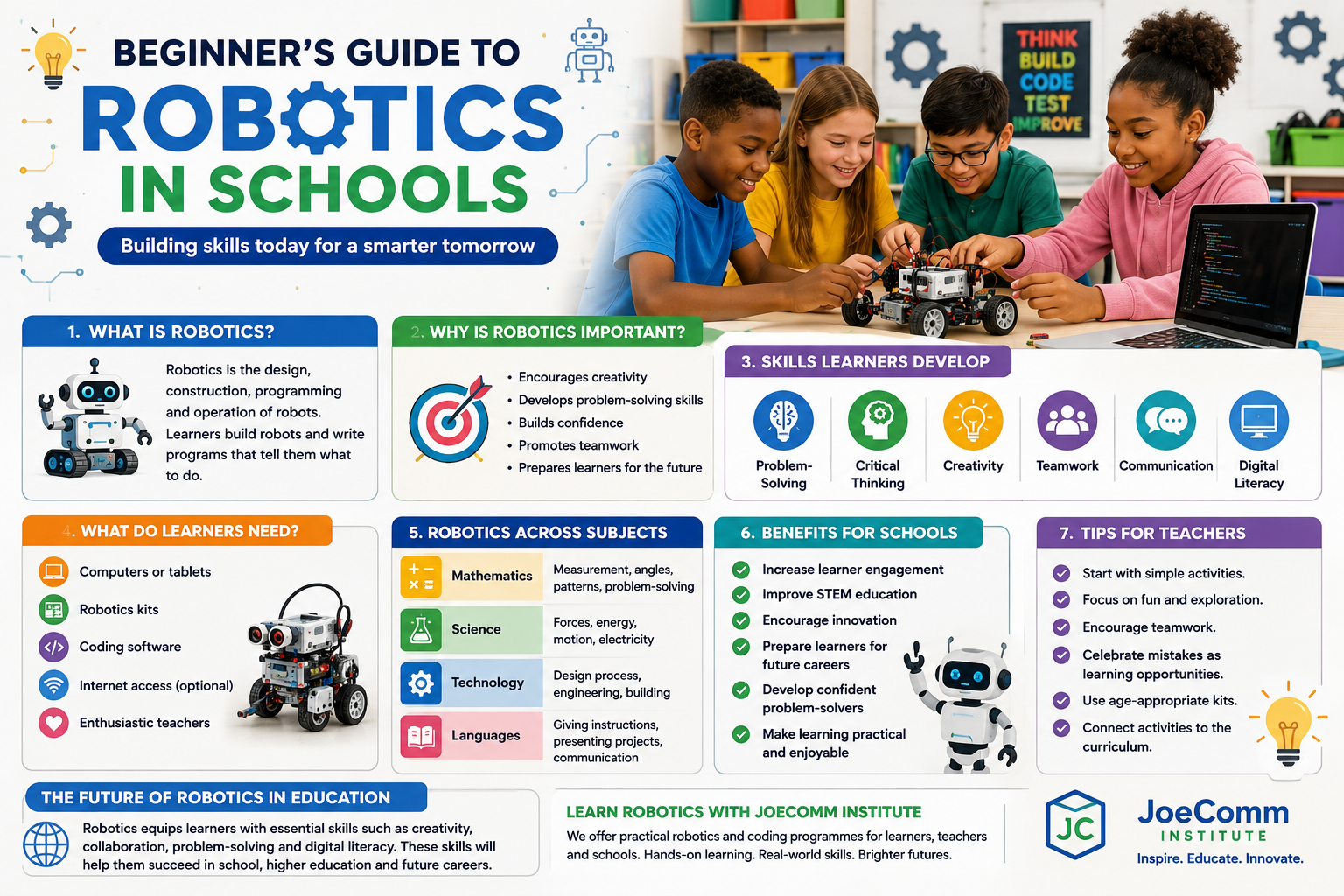
Robotics is transforming classrooms around the world by making learning exciting, interactive, and practical. More schools are introducing robotics to help learners develop the skills they need for the future. But what exactly is robotics, and why is it important in education?
This beginner’s guide explains the basics of robotics and how schools can successfully introduce it into everyday learning.
What Is Robotics?
Robotics is the design, construction, programming, and operation of robots. A robot is a machine that can perform tasks automatically or by following instructions created through coding.
In schools, learners build simple robots and write programs that tell them what to do, such as:
- Move forward or backward
- Turn left or right
- Avoid obstacles
- Follow a line
- Flash lights
- Play sounds
Robotics combines several subjects into one exciting learning experience.
Why Is Robotics Important?
Robotics prepares learners for a technology-driven future by developing practical skills that go beyond the classroom.
It helps learners:
- Think creatively
- Solve real-world problems
- Work in teams
- Develop logical thinking
- Build confidence
- Improve communication skills
Skills Learners Develop
Robotics supports the development of:
Problem-Solving
Learners identify challenges, test solutions, and improve their designs.
Critical Thinking
Children analyse situations before deciding how to program their robots.
Creativity
Learners design their own robots and invent unique solutions.
Teamwork
Most robotics activities encourage collaboration and sharing ideas.
Communication
Learners explain their designs, present projects, and work together effectively.
Digital Literacy
Children become confident using technology safely and responsibly.
What Do Learners Need?
Schools can begin robotics with only a few basic resources:
- Computers or tablets
- Robotics kits
- Simple coding software
- Internet access (optional)
- Enthusiastic teachers
Many beginner activities can even be completed without expensive equipment by using unplugged coding games and paper-based algorithms.
Robotics Across Different Subjects
Robotics is not only for technology lessons.
It can support learning in:
Mathematics
- Measurement
- Angles
- Patterns
- Problem-solving
Science
- Forces
- Energy
- Motion
- Electricity
Technology
- Design process
- Engineering
- Building models
Languages
- Giving instructions
- Presenting projects
- Communication
Benefits for Schools
Introducing robotics helps schools:
- Increase learner engagement
- Improve STEM education
- Encourage innovation
- Prepare learners for future careers
- Develop confident problem-solvers
- Make learning practical and enjoyable
Tips for Teachers
If you’re new to robotics:
- Start with simple activities.
- Focus on fun and exploration.
- Encourage teamwork.
- Celebrate mistakes as learning opportunities.
- Use age-appropriate robotics kits.
- Connect activities to the CAPS curriculum where applicable.
Remember, learners do not need to become experts immediately. The goal is to build confidence and curiosity.
The Future of Robotics in Education
Technology continues to shape the world we live in. Robotics equips learners with essential skills such as creativity, collaboration, problem-solving, and digital literacy. These skills will help them succeed in school, higher education, and future careers.
Schools that introduce robotics today are preparing learners for tomorrow’s opportunities.
Learn Robotics with JoeComm Institute
At JoeComm Institute, we offer practical robotics and coding programmes designed for learners, teachers, and schools. Our courses focus on hands-on activities, creativity, and real-world problem-solving while supporting quality education for the future.
Start your robotics journey today and inspire the next generation of innovators!
