Published by JoeComm Institute
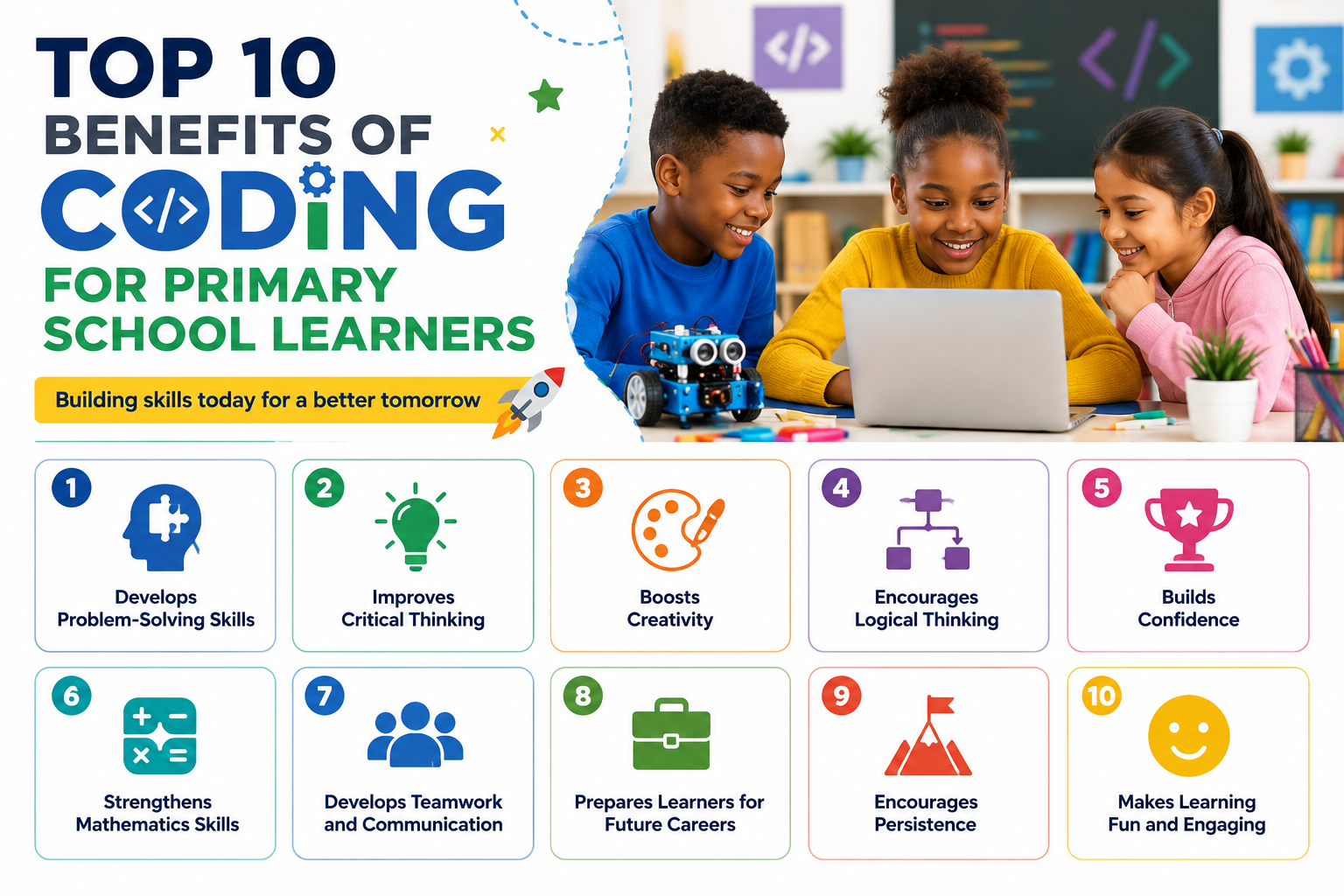
In today’s digital world, coding is becoming as important as reading, writing, and mathematics. Learning to code from an early age helps children develop valuable skills that prepare them for success both in school and in future careers. Coding is not just about computers—it teaches children how to think, solve problems, and create innovative solutions.
1. Develops Problem-Solving Skills
Coding encourages learners to break complex problems into smaller, manageable steps. This helps children think logically and find creative solutions.
2. Improves Critical Thinking
Children learn to analyse situations, identify patterns, and make informed decisions while creating computer programs and solving coding challenges.
3. Boosts Creativity
Coding allows learners to create games, animations, websites, and simple apps. It transforms their ideas into real digital projects.
4. Encourages Logical Thinking
Programming teaches children that every action has a result. They learn to follow sequences, algorithms, and logical processes to complete tasks successfully.
5. Builds Confidence
Completing a coding project gives learners a sense of achievement. Every program they build increases their confidence and motivates them to learn more.
6. Strengthens Mathematics Skills
Coding uses mathematical concepts such as numbers, patterns, measurement, sequencing, and problem-solving. Learners improve their mathematics skills while coding.
7. Develops Teamwork and Communication
Many coding and robotics activities involve working in teams. Learners share ideas, solve problems together, and develop strong communication skills.
8. Prepares Learners for Future Careers
Technology continues to grow across every industry. Early exposure to coding helps learners develop skills needed for careers in software development, engineering, robotics, artificial intelligence, cybersecurity, and many other fields.
9. Encourages Persistence
Coding teaches children that mistakes are part of learning. When a program doesn’t work, learners debug, test, and improve their solutions instead of giving up.
10. Makes Learning Fun and Engaging
Coding combines creativity, games, puzzles, and hands-on activities that make learning exciting. Children enjoy building projects while developing valuable lifelong skills.
Why Schools Should Teach Coding
Introducing coding in primary school equips learners with digital literacy, computational thinking, creativity, and confidence. These skills prepare them for success in the classroom and in the rapidly changing world of technology.
At JoeComm Institute, we believe every child deserves the opportunity to learn coding and robotics through engaging, practical, and age-appropriate lessons. Our programmes are designed to inspire curiosity, creativity, and a lifelong love of learning.
Final Thoughts
Coding is much more than learning a programming language. It develops problem-solving, creativity, resilience, and collaboration—skills that benefit learners in every subject and throughout their lives.
Ready to introduce coding and robotics to your classroom or school? Explore our courses and discover how JoeComm Institute can help learners build the skills they need for the future.
